Call Label Monitoring in 2025: How Businesses Detect, Remove, and Prevent Spam Call Labels
Call label monitoring has become one of the most critical protection tools for businesses in 2025. With the rapid rise of robocalls, spoofing, and phone scams, mobile carriers and third-party databases now actively label calls as “Spam Risk,” “Scam Likely,” or “Fraud Suspected.” While these labels protect consumers, they often harm legitimate businesses when their numbers are incorrectly flagged.
For companies that rely on outbound calls for sales, support, or customer verification, a spam label can destroy answer rates overnight. This is why call label monitoring is no longer optional — it is a necessity for protecting brand reputation, customer trust, and revenue.
In this complete guide, we explain how call label monitoring works, why it matters, and how businesses can use it to detect, remove, and prevent harmful call labels in 2025.
What Is Call Label Monitoring?
Call label monitoring is the continuous tracking of how your business phone numbers appear on consumer devices across major carriers and spam-detection databases. It checks whether your calls are being displayed as verified, unknown, spam, or scam in real time.
These labels are generated using complex algorithms based on complaint data, call behavior, volume patterns, and reputation scoring. Even legitimate businesses can receive negative labels if their dialing patterns appear risky or if users report their calls.
Call label monitoring tools constantly scan these databases, alerting businesses as soon as a negative label appears so corrective action can be taken immediately.
Why Call Label Monitoring Is Critical for Businesses in 2025
Consumer trust in unknown phone numbers continues to decline. Most people ignore calls labeled as spam without even checking who is calling. For businesses, this results in:
Lower answer rates, lost sales opportunities, reduced customer engagement, higher marketing costs, and damaged brand credibility. Without call label monitoring, companies often remain unaware of the problem until results collapse.
Call label monitoring gives businesses early warnings before serious revenue damage occurs. It allows teams to protect dialing reputation and maintain consistent customer communication.
How Call Label Monitoring Detects Spam Labels
Modern call label monitoring systems continuously test your numbers across carrier networks and third-party reputation databases. These systems simulate real consumer devices to see exactly how your calls are displayed.
If a number is labeled with spam, scam, or fraud indicators, the system instantly records the label, the source database that issued it, and the geographic impact. Businesses receive real-time alerts so they can respond immediately instead of discovering the issue weeks later.
How Call Label Monitoring Helps Remove Spam Labels
Detection alone is not enough. The true power of call label monitoring is its ability to support fast remediation. Once a negative label is identified, businesses can submit correction requests to the appropriate databases.
This process often includes business verification, proof of legitimate use, review of dialing behavior, and in some cases direct carrier communication. With proper monitoring and documentation, many spam labels can be removed within days rather than months.
Without monitoring, businesses often continue dialing with a damaged reputation, making label removal far more difficult.
Preventing Future Spam Labels With Call Label Monitoring
Prevention is just as important as detection. Continuous call label monitoring allows businesses to identify risky dialing trends before they trigger new spam labels.
High call volumes in short time frames, repeated short-duration calls, low answer rates, and inconsistent caller ID usage are all common triggers for negative labeling. Monitoring tools highlight these risks so businesses can adjust their strategy in advance.
This proactive approach helps maintain clean reputation scores across all outbound numbers.
Industries That Rely Heavily on Call Label Monitoring
Some industries face higher labeling risks than others due to the nature of their outbound calling activity. These include financial services, healthcare, insurance, political campaigns, debt collection, real estate, and contact centers.
For these sectors, call label monitoring is essential not only for revenue protection but also for regulatory compliance and brand safety.
Business Benefits of Call Label Monitoring
Companies that implement call label monitoring experience measurable improvements across multiple performance areas. Key benefits include:
Higher call answer rates due to clean caller labels, improved customer trust through verified call display, reduced loss from misclassified spam calls, faster resolution of labeling issues, and protection of long-term brand reputation.
Marketing teams also benefit because accurate call display increases conversion rates and maximizes advertising return on investment.
Call Label Monitoring and Caller ID Reputation Management
Call label monitoring works closely with caller ID reputation management. While reputation refers to how databases score your phone numbers, labels are the public result of that score as seen by customers.
Monitoring feeds directly into reputation improvement strategies such as proper number registration, call authentication, responsible dialing volumes, and customer complaint management.
Together, these practices ensure long-term label stability across all campaigns.
How to Implement Call Label Monitoring for Your Business
Implementing call label monitoring is a straightforward process when handled correctly. Businesses start by enrolling their outbound numbers into a professional monitoring platform.
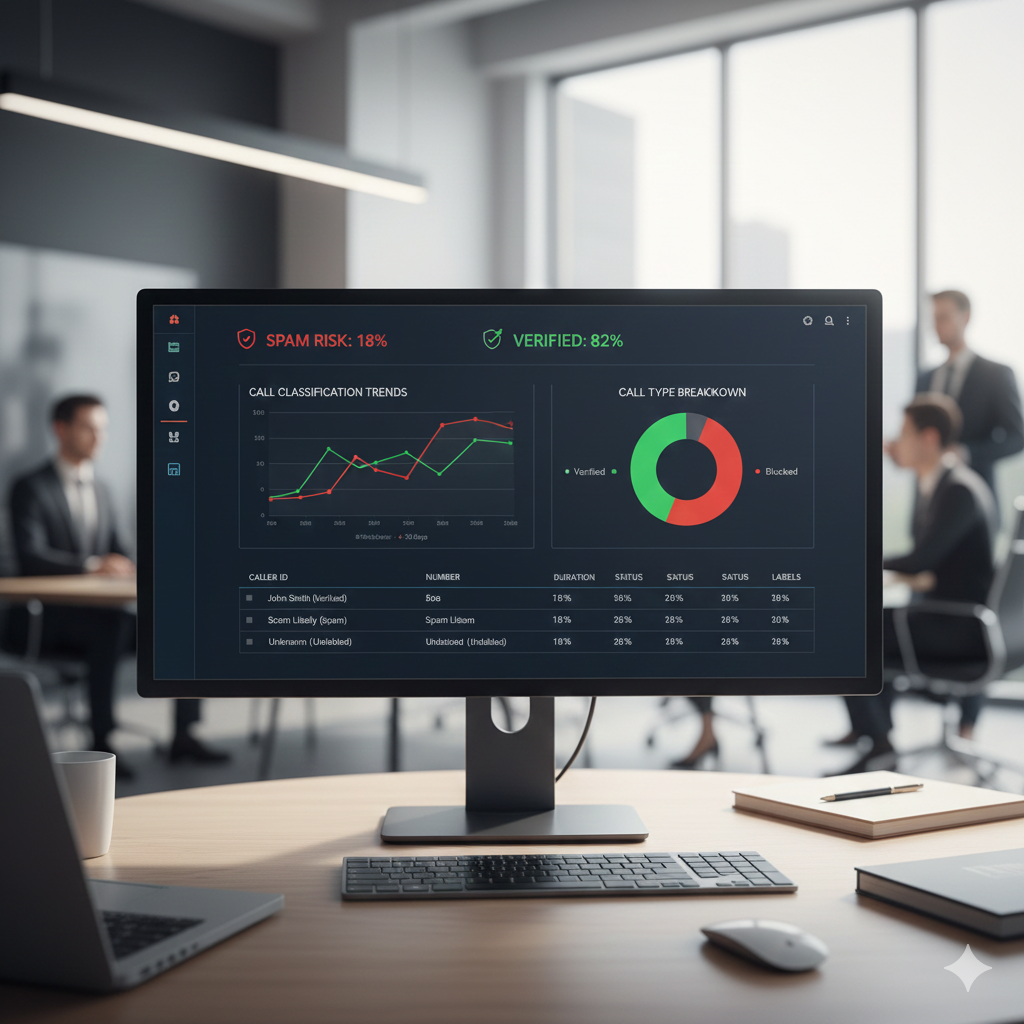
The system then begins real-time scanning across databases and carrier networks. Alerts are configured for any label changes. Dedicated reporting dashboards provide visibility into number health, reputation trends, and geographic impact.
Integration with CRM and dialing systems further streamlines label management and operational decision-making.
The Future of Call Label Monitoring in 2025 and Beyond
As spam detection systems become more advanced, call label monitoring will rely increasingly on artificial intelligence and predictive analytics.
Future systems will not only detect current labels but also forecast the risk of future misclassification based on behavior patterns. This will give businesses the ability to make proactive adjustments before damage occurs.
Stricter regulations and stronger consumer protection policies will make monitoring even more essential for all outbound-calling organizations.
Final Thoughts
Call label monitoring is now a core business protection strategy in 2025. With spam labels directly impacting answer rates, sales performance, and customer trust, businesses can no longer afford to operate blind to how their calls appear on consumer devices.
By detecting labels early, removing negative classifications quickly, and preventing future risks through proactive reputation management, companies protect not only their call performance but also their brand credibility.
A reliable call label monitoring system ensures that every outbound call reaches customers with trust, transparency, and maximum conversion potential.
To learn more about protecting your dialing reputation, explore our related guide here:
Caller ID Reputation Management
For industry reference on spam call labeling, see:
FCC Robocall & Spam Call Guidelines